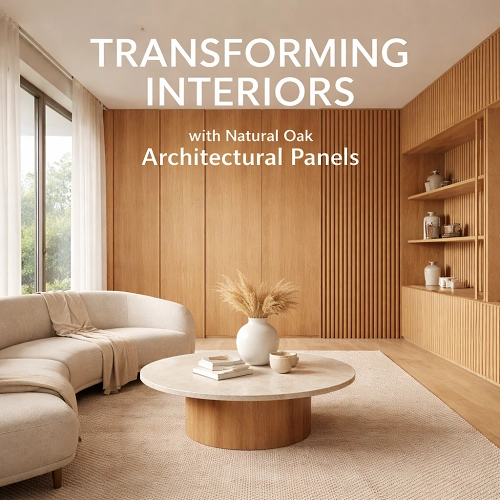
In contemporary interior design, the demand for materials that balance aesthetic appeal with functional durability continues to grow. Natural Oak Architectural Panels represent a sophisticated solution for designers and architects seeking to incorporate authentic wood elements into both residential and commercial spaces. Manufactured by MOOSOO (Zhejiang Heyong Home Furnishing Intelligent Manufacturing Co., Ltd.), these premium panels combine traditional craftsmanship with modern manufacturing techniques to deliver a product of exceptional quality.
Unlike standard wall finishes, these panels offer visual depth, tactile richness, and the warmth inherent to natural wood. The steel-brushed finish further enhances their distinctive character, making them an ideal choice for projects where authentic materials and contemporary design converge.
Illustration of Natural Oak Architectural Panels showcasing the characteristic steel-brushed texture and warm wood tone
The exceptional quality of Natural Oak Architectural Panels begins with careful material selection and an advanced manufacturing process. These panels are constructed from solid oak wood, sourced to meet stringent quality standards. The solid wood splicing technique—a process where multiple pieces of oak are precisely joined—creates panels of substantial dimension and structural integrity.
The defining characteristic of these panels is the steel-brushing process, which plays a critical role in both aesthetics and functionality. This mechanical treatment removes softer wood fibers along the grain, revealing deeper, more defined grain patterns beneath the surface. The result is a panel with enhanced tactile qualities and a distinctive appearance that cannot be replicated through surface staining alone.
MOOSOO employs precision machinery and skilled craftspeople to ensure each panel meets exacting standards. The steel-brushing technique requires controlled pressure and speed to achieve the signature finish without compromising structural integrity. This combination of technology and expertise ensures consistency across all production batches.
Proper installation is essential to maximize the longevity and performance of Natural Oak Architectural Panels. While these panels are designed for ease of installation, attention to detail during the installation phase prevents future issues related to wood movement, moisture absorption, and structural concerns.
Three primary installation approaches are recommended:
Natural wood expands and contracts in response to humidity and temperature changes. Failure to account for this movement is a common installation error. Maintain gaps of 2–3 millimeters between adjacent panels and at walls, ceilings, and other architectural elements. This clearance prevents buckling, cupping, or compression during seasonal transitions. Additionally, apply appropriate sealants or trim to exposed edges to protect against moisture ingress and mechanical damage.
Installation spacing diagram demonstrating proper gap maintenance between Natural Oak Architectural Panels
The durability of Natural Oak Architectural Panels depends significantly on appropriate ongoing maintenance. These are not static, maintenance-free surfaces; rather, they require periodic attention to preserve their aesthetic and functional qualities.
Wood naturally responds to environmental conditions. Maintaining indoor relative humidity between 40–60% is critical for preventing wood movement that can lead to warping, cupping, or surface cracking. In climates with pronounced seasonal changes, monitor humidity levels and use humidifiers or dehumidifiers as needed.
Depending on climate and manufacturer recommendations, periodic application of wood-safe conditioning oils may be beneficial. These products replenish the wood's natural oils and enhance its appearance. Always test conditioning products in an inconspicuous area before applying broadly, and follow the product manufacturer's instructions carefully.
The aesthetic flexibility of Natural Oak Architectural Panels makes them suitable for diverse design contexts. Their warm, natural tone and distinctive texture adapt to both contemporary minimalist interiors and traditional, heritage-inspired spaces.
In homes, these panels excel in several contexts. Living rooms benefit from feature wall installations that create visual focal points without overwhelming spaces. Bedrooms gain a sense of warmth and refuge through strategic panel placement. Hallways and entry areas can be transformed through full or partial coverage, establishing architectural character and anticipating interior design themes in adjacent rooms.
Commercial interiors—including corporate offices, hospitality venues, and retail environments—benefit from the professional sophistication these panels convey. Office boardrooms gain authority and substance through tasteful panel installations. Hotel lobbies and restaurant dining areas create memorable, texturally rich environments that distinguish the space from standardized commercial interiors.
Ceiling installations add unexpected depth and acoustic benefits. Cabinetry facades upgrade standard joinery through visible wood cladding. Custom built-in installations—including shelving units, media walls, and accent niches—incorporate panels as design elements that unify disparate architectural features.
While Natural Oak Architectural Panels are engineered for durability, certain installation and environmental conditions may present challenges. Understanding these issues and their solutions ensures successful long-term performance.
Problem: Warping, cupping, or surface cracking resulting from excessive moisture exposure or inadequate humidity control.
Prevention: Acclimate panels before installation, maintain humidity between 40–60%, ensure proper ventilation in areas subject to steam or moisture (bathrooms, kitchens), and apply appropriate sealants to exposed edges.
Problem: Visible fasteners rust, stain, or detract from aesthetic design intent.
Solution: Specify stainless steel or corrosion-resistant fasteners, use color-matched fastening systems, or select hidden fastening methods for seamless appearance.
Problem: Gaps widen excessively or panels shift position due to inadequate spacing allowance or installation errors.
Correction: Verify initial spacing compliance (2–3mm minimum), check humidity levels, assess installation method, and consult MOOSOO technical support if issues persist.
Problem: Panels separate from substrate or fasteners loosen over time.
Prevention: Use construction adhesive rated for wood applications and environmental conditions, ensure substrate preparation is thorough, tighten fasteners periodically, and avoid application in extreme temperature conditions during installation.
Understanding how Natural Oak Architectural Panels compare to alternative cladding solutions helps inform material selection for specific projects.
MOOSOO is committed to sustainable forestry practices and responsible material sourcing. Natural oak used in these panels is selected from sustainably managed forests, supporting environmental stewardship while delivering premium product quality. This commitment to sustainability allows designers and specifiers to integrate these panels into projects with confidence that they represent responsible material choices.
MOOSOO (formally Zhejiang Heyong Home Furnishing Intelligent Manufacturing Co., Ltd.) is a leading Chinese manufacturer specializing in wood architectural cladding and decorative elements. Based in Zhejiang Province, the company combines traditional wood craftsmanship with advanced manufacturing technologies to produce panels that meet international quality standards.
The company's product portfolio includes the Natural Series, featuring this Natural Oak product, as well as the Art Series and Technology Series. Each product line reflects MOOSOO's dedication to innovation, quality, and design excellence.
Legal Name: Zhejiang Heyong Home Furnishing Intelligent Manufacturing Co., Ltd.
Trading Name: MOOSOO
Location: No. 129 Jinxiu Avenue, Yaozhuang Town, Jiashan County, Jiaxing City, Zhejiang Province, China
Contact Email: sales@moosoo.com.cn
Contact Phone: 0086-13957350809
Website: woodveneermanufacturer.com
Natural Oak Architectural Panels work seamlessly with other MOOSOO products to create cohesive, sophisticated interior environments. Consider complementary offerings for comprehensive design solutions.
For architects, designers, and specifiers preparing project documentation, Natural Oak Architectural Panels are available through MOOSOO's distribution network. Detailed technical specifications, sample requests, and bulk ordering inquiries can be directed to the company's sales department.
To Request Samples or Submit Specifications:
Email: sales@moosoo.com.cn
Phone: 0086-13957350809
Natural Oak Architectural Panels represent more than a material choice—they embody a commitment to authenticity, quality, and refined design. Their solid wood construction, distinctive steel-brushed finish, and versatile application possibilities make them an exceptional solution for designers and architects seeking to elevate interior environments with tactile richness and visual sophistication.
Whether applied to feature walls in residential settings, used to establish authority in commercial boardrooms, or integrated into specialized architectural installations, these panels deliver the warmth, character, and durability that distinguish thoughtfully designed interiors from ordinary spaces.
By understanding material properties, installation best practices, maintenance requirements, and technical considerations, specifiers and installers can maximize the potential of Natural Oak Architectural Panels and ensure their long-term performance and aesthetic contribution to architectural projects. With proper installation and care, these panels will continue to enhance interior environments for decades, aging gracefully and developing the character that only authentic materials can provide.